
Experience Real-Time Gaming with a Live Dealer Casino from Home
Have you ever wondered what it feels like to play blackjack or roulette from your sofa while a real person deals the cards or spins the wheel? A live dealer casino streams a physical table, professional croupier, and authentic gaming equipment directly to your screen in real time. You place your bets through an intuitive interface, and the dealer handles the physical chips and cards, bridging the gap between online convenience and land‑based atmosphere. This setup allows you to interact with the dealer and sometimes other players via chat, making each session more social and immersive.
Why Real-Time Gaming Is Reshaping Online Play

Real-time gaming is reshaping online play by collapsing the gap between digital convenience and authentic casino atmosphere. In live dealer casinos, real-time streaming replaces pre-rendered animations, allowing players to watch a physical dealer shuffle cards or spin a roulette wheel as it happens. This immediacy brings genuine social interaction through live chat, letting players react to outcomes and banter with the dealer—a dynamic impossible in standard RNG games. The elimination of delay between player action and visual outcome creates trust; you see the card dealt, not a number generated by code. For experienced players, this means you can apply real-world strategies like reading a dealer’s hand motions or bet timing, because the gameplay mirrors a brick-and-mortar table. It transforms online play from solitary clicks into a shared, instantaneous experience.
The shift from RNG to human-led tables
For years, random number generators dictated every card and spin, creating a sterile, isolated experience. The shift from RNG to human-led tables reintroduces genuine unpredictability and social connection. Players now witness a real dealer shuffle and deal, which eliminates skepticism about algorithm manipulation. This change transforms gaming into an interactive event, where a dealer’s demeanor and pace affect the flow. The authenticity of human-led interaction builds trust that software alone cannot replicate. Why do players increasingly prefer human-led tables over RNG? Because watching a physical card fall or a roulette ball spin in real time provides tangible proof of fairness, making each round feel more legitimate and engaging.
How streaming tech creates an authentic atmosphere
Multi-camera streaming tech captures the dealer’s shuffle, the spin of the wheel, and the fall of cards from precise angles, eliminating the delay that breaks immersion. This real-time visual fidelity, combined with ambient table sounds like chip shuffling and dealer chatter, replicates the physical casino’s sensory density. The psychological effect is subtle yet decisive: the player’s brain stops processing the stream as a video and instead registers it as a co-located event. Such technical seamlessness directly supports authentic atmosphere construction, because every millisecond of latency or frame chopping would otherwise shatter the illusion of being present at a felt table.
Core Differences Between Automated Games and Studio Tables
In a live dealer casino, the core difference between automated games and studio tables is the presence of a human dealer managing real-time decisions and physical equipment. A studio table relies on a live croupier who manually shuffles cards or spins a roulette wheel, creating a natural, non-repetitive pace and allowing for genuine interaction. Conversely, an automated game uses a Random Number Generator (RNG) to instantly determine outcomes, often replacing human personnel with a pre-recorded or simulated environment. This automation eliminates waiting for dealer actions, granting faster play and predictable game flow, but it strips away the social nuance and physical verification of the outcome. A studio table’s inherent uncertainty in manual handling provides a more authentic, though slower, experience compared to the sterile precision of RNG-based automation. The key choice is between human-driven atmosphere and machine-driven speed.
Player interaction with dealers versus software
When you play automated games, your only interaction is tapping a screen to spin or deal—no chat, no banter. At live dealer tables, you can type to the dealer, who often responds to wins, jokes, or simple greetings in real time. This creates a social layer that software simply lacks. The dealer might call out your username on a big win, making it feel like a real casino floor. Software reacts with algorithms; a dealer reacts with personality. For players who crave connection, the hands-on live dealer interaction transforms each hand from a transaction into a shared experience.
Player interaction with dealers is personal and conversational, while software interaction is silent and purely functional.
Pacing, chip limits, and decision windows in real time
In live dealer games, real-time pacing constraints dictate that each hand or spin proceeds at a fixed, human-dependent tempo, unlike automated games where players control speed. Chip limits are enforced per bet and across the table, with a dealer physically verifying maximums before dealing. The decision window for actions like hitting or standing is typically 10–20 seconds, set by the studio’s software and displayed on-screen; exceeding it results in an automatic “stand” or forfeit. These three factors—pacing, chip limits, and decision windows—create a structured, non-adjustable rhythm that mirrors a physical casino floor without user override.
Popular Table Variants in the Streaming Environment
In the live dealer streaming environment, Lightning Roulette stands out by merging classic wheel spins with random multiplier payouts, while Infinite Blackjack eliminates seat limits so players always join. Speed variants like Speed Baccarat cater to fast-paced players with 27-second rounds. Unique streams such as Dream Catcher and Crazy Time transform wheel-of-fortune mechanics into interactive game shows with bonus rounds. These variants leverage HD multi-camera angles and real-time chat, making the experience both social and unpredictable.
Blackjack: Speed, side bets, and multi-hand options
Speed in live dealer Blackjack shifts the tempo, with rapid multi-hand options letting you play up to three spots simultaneously, intensifying every decision. Side bets like Perfect Pairs and 21+3 inject instant payouts for specific card combos, turning routine hands into high-stakes gambles. For stream viewers, this combination means non-stop action: you fold or double across multiple seats while hoping a suited pair triggers a bonus. The table below compares key traits:
| Feature | Impact |
|---|---|
| Speed Rounds | Quick shuffles and minimal dealer delay |
| Side Bets | Immediate bonus payouts on side outcomes |
| Multi-Hand | Up to three hands per round, boosting action |
Roulette: Wheel cameras, track history, and racetrack bets
In the live dealer casino environment, roulette tables leverage multiple wheel cameras to deliver a close-up, high-definition view of the ball’s trajectory and final pocket, eliminating any doubt about spin integrity. This visual clarity directly supports the track history feature, which displays a running log of previous winning numbers—often color-coded by red/black and odd/even—allowing players to identify statistical patterns for their next wager. The interface also integrates racetrack bets, a specialized betting layout that mirrors the physical wheel’s number sequence, enabling precise wagers on sectors like *Voisins du Zéro* or *Orphelins* without requiring memorization. These three elements—camera feeds, historical data, and the racetrack grid—work in concert to replicate the tactile immersion of a land-based table while providing data-driven decision tools.
Baccarat: Squeeze features and pattern recognition tools
In live dealer baccarat, squeeze features replicate the physical ritual of slowly revealing cards from the edge, building suspense by allowing players to control the speed of exposure. Pattern recognition tools then overlay historical results, displaying trends like banker streaks or player runs directly on the interface. Skilled users combine these visual cues with bead road or big road charts to anticipate shifts in dealer shoe outcomes. Card squeeze and trend mapping thus transform passive observation into a calculated, tactile experience.
- Interactive squeeze control lets you peel cards incrementally, mimicking VIP table traditions.
- Automated pattern mapping via bead or big road charts highlights recurring streak frequencies.
- Real-time deviation indicators flag when historical patterns begin to break from norm.
Technology Powering the Immersive Experience
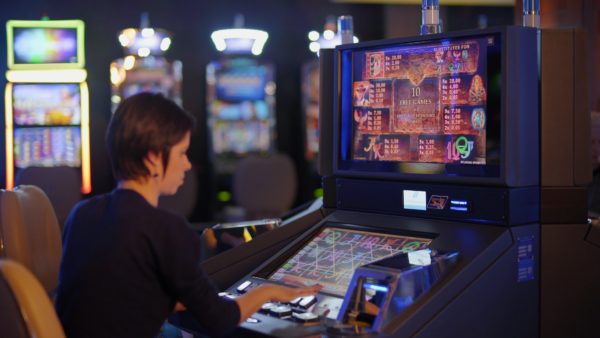
High-definition multi-camera arrays, often employing 4K streams, capture every angle of the table to deliver a seamless immersive video streaming experience. Optical character recognition (OCR) technology instantly translates physical card values and chip movements into digital data, ensuring real-time game synchronization. Low-latency encoding protocols minimize delay, allowing players to place bets and react simultaneously with the live action. Advanced audio systems capture the ambient sounds of shuffling and dealer interaction, while specialized lighting and green-screen environments focus attention solely on the game. This fusion of live video capture and data processing creates a transparent, interactive environment that mirrors a physical casino floor.
Multiple camera angles and optical character recognition
Multiple camera angles provide players with a seamless, cinematic view of the live dealer table, switching between wide shots, chip-level close-ups, and card reveals to eliminate any blind spots. Optical character recognition (OCR) instantly translates the physical cards and roulette ball positions into digital data, ensuring that bets are resolved in real-time without human delay. This synergy between angles and OCR creates a transparent, verifiable flow of action, making the experience feel both authentic and technologically precise. Players benefit from real-time data translation that mirrors their on-screen interface, bridging the gap between a physical casino and their device.
Low-latency streaming and server-side shuffling
Real-time dealer interaction hinges on ultra-low-latency streaming, which transmits card actions and wheel spins with sub-second delay, preserving the natural rhythm of play. Server-side shuffling occurs in a secure, encrypted environment before the stream begins, ensuring every deck is randomized instantly and independently of the video feed. This dual architecture eliminates any chance of pattern prediction or feed manipulation, as shuffle outcomes are determined before the dealer touches the cards. Players see genuine, unscripted results without buffering, making each hand feel immediate and verified.
Low-latency streaming delivers live action without perceptible lag, while server-side shuffling guarantees fair, pre-verified randomness—together, they underpin trust and immersion in every round.
Choosing a Reliable Platform for Human-Led Tables
When choosing a reliable platform for human-led tables in a live dealer casino, prioritize streaming stability and croupier professionalism. get Slotsofvegas Casino bonus code Verify that the platform uses multiple camera angles with minimal latency to ensure an immersive, uninterrupted experience. A reputable provider will offer clearly displayed betting limits and game rules before the session begins. Subtle cues like the dealer’s eye contact and card handling rhythm can indicate a well-trained, audited staff. Always check that the interface allows real-time chat with the dealer, as this directly reflects operational integrity and player engagement.
Licensing, fairness audits, and game provider reputations
Before committing to a live dealer casino, verify its licensing and fairness certification. Trusted platforms display their license from authorities like the UKGC or MGA, ensuring oversight. For fairness audits, look for seals from eCOGRA or iTech Labs—these prove the RNG and card-shuffling algorithms are independently tested. The game provider’s reputation matters too; established studios like Evolution or Playtech minimize rigging risks and offer professional dealers. Reputable studios undergo constant auditing. Q: How do I check a provider’s fairness history? A: Read player reviews on forum threads and check their published audit reports from third-party testers.
Language, dealer professionalism, and table availability
When selecting a platform for human-led tables, multilingual support and dealer professionalism directly impact gameplay quality. Language availability ensures real-time communication and rule clarity, with native-speaking dealers preferred for Asian or European markets. Professionalism includes consistent etiquette, accurate card handling, and minimal chat disruption; flagged dealers should be avoided. Table availability hinges on Peak-hour redundancy—fewer than three open baccarat or blackjack tables at prime times suggests poor capacity planning. Cross-check language options, dealer training certifications (if visible), and 24/7 table count before committing.
Language options, dealer conduct, and 24/7 table capacity are the three practical filters for platform reliability.
Strategies to Maximize Engagement and Win Potential
To maximize win potential in live dealer games, focus on bankroll management and game-specific betting strategies, like the Martingale or Paroli systems, to capitalize on streaks while minimizing losses. Engage actively by studying the live dealer’s shoe patterns or shuffle tendencies in blackjack, and observing bet placement speeds in roulette to spot predictive flows. Q: How can you boost engagement mid-session? A: Pause after three consecutive losses to reassess table dynamics and bet size, keeping your approach disciplined and adaptive. This controlled rhythm sustains both focus and potential returns.
Betting progressions suited to slower-paced rounds
For slower-paced rounds, like those in live baccarat or blackjack, a flat betting progression works best to keep your bankroll stable. Instead of chasing losses with aggressive Martingale-style doubling, simply wager a fixed unit each hand. This lets you enjoy the dealer’s banter and the buzz of the real table without panic-decisions eating your chip stack. You can switch to a low-stakes Parlay system—only increase your bet after a win, resetting on a loss—to ride small win streaks while keeping rounds relaxed. It’s the calm, steady heartbeat for a long, fun session.
Tracking shoe composition and dealer tells
Tracking shoe composition involves mentally logging the ratio of high to low cards dealt, enabling you to adjust bet sizes when the deck favors larger payouts. Simultaneously, observing dealer tells—such as subtle variations in card handling, speed of dealing, or glance patterns—can reveal behavioral leaks. Combining these two tactics provides a live dealer edge detection method, as a dealer’s unconscious rhythm often mirrors the shoe’s shifting state. A focused player correlates a sudden dealer pause with a high-card-heavy segment, then capitalizes by raising wagers precisely when the statistical and behavioral signals align.
Mobile Compatibility and Touch Interface Design
In live dealer casinos, mobile compatibility hinges on seamless streaming and low-latency interaction, ensuring the dealer’s real-time actions sync perfectly with your touch inputs. The touch interface design prioritizes oversized, thumb-friendly buttons for bets, cards, and chat, eliminating accidental taps during high-stakes moments. Yet, the true art lies in balancing rich visual data—like pit layouts and chip stacks—with a clean layout that doesn’t overwhelm a 6-inch screen. Scrolling through side bets or adjusting wagers feels fluid thanks to haptic feedback and gesture-based swipes, replicating the tactile essence of a physical table without compromising speed.
Responsive layouts for vertical and horizontal play
In live dealer casino design, responsive layouts for vertical and horizontal play must preserve real-time betting interfaces and camera feeds upon device rotation. A vertical layout optimizes one-handed thumb reach for chip selection and betting buttons, while horizontal play expands the table space, allowing side-by-side viewing of the live stream and betting history. The UI must recalibrate touch targets and rearrange the dealer feed, bet slip, and chat panel without occluding the game window during orientation change. Failing this, players risk mis-taps or lost action during live rounds. Testing should verify that all critical controls remain within thumb zones in both modes.
Optimized chip placement and chat functionality

Optimized chip placement on mobile live dealer interfaces positions betting zones directly within the player’s thumb reach, reducing accidental taps. This design clusters value options near the action area to streamline rapid decisions between rounds. Seamless chat placement follows a specific sequence:
- Chat button rests at the bottom-right corner, outside the betting grid.
- Keyboard overlay pushes the table view upward without obscuring dealer actions.
- Sent messages auto-hide the keyboard, returning focus to chip selection.
This logical flow ensures chat exchanges never disrupt wagering rhythm, maintaining touch-screen efficiency during fast-paced rounds.
Bankroll Management When Playing Against a Human
When facing a human dealer in a live casino, your bankroll management must account for the psychological game. Unlike RNG, a dealer can sense hesitation or aggression through bet sizing. Bet strategically—vary your wagers unpredictably to avoid revealing your stack depth. Never chase losses with increased bets against a human, as they will exploit your tilt. Instead, set a strict session cap at 1-2% of your bankroll per hand to weather their psychological pressure. Observe their dealing rhythm to time your stake increases, but always protect your capital by walking away after three consecutive losses.
Session limits, speed control, and emotional detachment
When facing a human dealer, impose strict session limits to prevent chase-driven losses, as the live pace invites prolonged play. Control the game’s rhythm by reducing bet speed after a loss, forcing your opponent into impatient decisions. Maintain emotional detachment by treating each hand as a discrete event—avoiding tilt when the dealer reads your reactions. This triad turns your discipline into a tactical advantage, curbing impulsive behavior and preserving your bankroll against psychological pressure.
Session limits cap your exposure, speed control disrupts your opponent’s flow, and emotional detachment neutralizes the dealer’s psychological leverage, ensuring you play with cold precision.
Understanding commission fees and minimum bets
In live dealer games, commission fees and minimum bets directly shape your bankroll strategy against a human opponent. Vigorish on banker bets in baccarat, typically 5%, accumulates with each hand and erodes your stack faster than a flat bet against a dealer. Minimum bets set your entry point; a $25 table means you must risk $25 per decision, compounding losses swiftly if you chase. Calculating the house edge per round—factoring both commission and the minimum—lets you determine how many rounds your bankroll can survive. Always account for commission deductions when planning session stakes; ignoring them can leave you short before the human’s strategy matters.
Bonuses and Promotions Tailored for Streaming Tables
Live dealer casinos now offer bonuses tailored for streaming tables that differ from standard slot promotions. These often include cashback on specific game losses, such as in live blackjack or roulette, calculated as a percentage of net losses over a set period. Some platforms provide enhanced odds or insurance bets exclusively for streamed tables, reducing the player’s risk on specific outcomes. Deposit matches may also be restricted to live dealer games, requiring a code to activate. Loyalty rewards often grant exclusive access to high-limit streaming tables, offering a practical benefit for regular players. Always check the wagering requirements, as these promotions typically demand higher playthrough on table games to convert bonus funds. Streaming table cashback is a straightforward example of such tailored promotions, providing direct value.
Cashback offers, deposit matches, and tournament eligibility
For streaming tables, cashback offers, deposit matches, and tournament eligibility are structured to offset the higher stakes. A typical deposit match might cap at 100% up to $1,000, applied exclusively to baccarat or blackjack streams. Cashback often rebates a percentage of net losses (e.g., 10%) from these dedicated tables. Tournament eligibility usually requires a minimum qualifying deposit of $50 and a specified playthrough on eligible streaming hands. The table below clarifies these conditional differences:
| Promotion Type | Streaming Table Condition |
|---|---|
| Deposit Match | Applies only to deposits made via a special streaming bonus code; max match tied to table limits. |
| Cashback | Calculated on losses from streaming-specific table rounds; paid weekly with zero wagering. |
| Tournament Entry | Requires a 50x bet on live stream tables within 24 hours of deposit to unlock leaderboard. |
The eligibility logic ensures players who leverage these offers are actively engaged with the high-velocity streaming environment, not just leveraging promos across standard tables.
Wagering requirements specific to table game contributions

When wagering a bonus at live dealer tables, contributions are drastically lower than slots. Blackjack, roulette, and baccarat typically count at only 10% to 20% toward the playthrough, meaning a $100 bet on these games moves only $10 to $20 toward the requirement. This creates a mathematical gap: you must risk significantly more real money to clear the bonus. For live dealer table game contributions, follow this logical sequence:
- Check the bonus terms for the exact contribution percentage (e.g., 10% for blackjack).
- Multiply the wagering requirement by the inverse of that percentage to calculate the total turnover needed.
- Confirm whether specific table limits or excluded bets (e.g., outside bets in roulette) further reduce effective contribution.
This forces precise bet sizing to avoid wasted wagering effort on low-contribution rounds.
Future Trends in Human-Dealt Virtual Gaming
In the near future, human-dealt virtual gaming will evolve beyond screens, where dealers interact with players through fully immersive live dealer casino environments rendered in real-time. A player might gesture to a digital blackjack table, only for a real croupier to respond via holographic projection, dealing physical cards that appear virtually. This blurs the line between remote play and land-based intimacy. Each dealer will use AI-assisted tools to track micro-expressions, ensuring the human touch remains dynamic while personalized side bets and instant chat pop-ups create a narrative of shared risk. The dealer’s voice becomes the anchor, guiding the virtual space as players drop virtual chips in real-time, making every hand feel like a private salon rather than a broadcast. No two sessions will feel identical, because the human element adapts to each unique player’s rhythm.
VR integration and holographic dealer projections
VR integration transports players into a fully immersive digital casino floor, where they can interact with tables and chips in a 3D space. Holographic dealer projections use volumetric capture to render a live dealer as a life-sized, floating image within this virtual environment, replacing flat video feeds. This immersive live dealer simulation allows players to choose their viewing angle and proximity to the hologram, creating a sense of physical presence without being at a land-based venue. Latency reduction is critical, as precise synchronization between the dealer’s real-time actions and the player’s VR movements ensures seamless gameplay.
VR integration merges a simulated casino space with holographic dealer projections, delivering a fully depth-aware, interactive experience where the dealer appears as a real-time 3D presence in the player’s immediate virtual surroundings.
Blockchain-based fairness and provable random outcomes
In live dealer casinos, blockchain-based provable fairness systems record every game outcome on a distributed ledger, allowing players to independently verify that results were generated from verifiable random seeds. A hash-commitment scheme posts the dealer’s shuffle seed or deck order before a hand begins, then after the round, the player can check the hash against the revealed sequence. This eliminates reliance on the operator’s server-side logs. A clear sequence for verification:
- Player receives a hashed seed before the round.
- Dealer interacts with physical cards or a digital RNG.
- After outcome, operator reveals the original seed.
- Player computes the hash and confirms it matches the pre-committed value.
This process guarantees that no retroactive manipulation occurred.